Is Your Electrical Panel Safe? FPE, Zinsco & Aluminum Wiring in Utah Homes
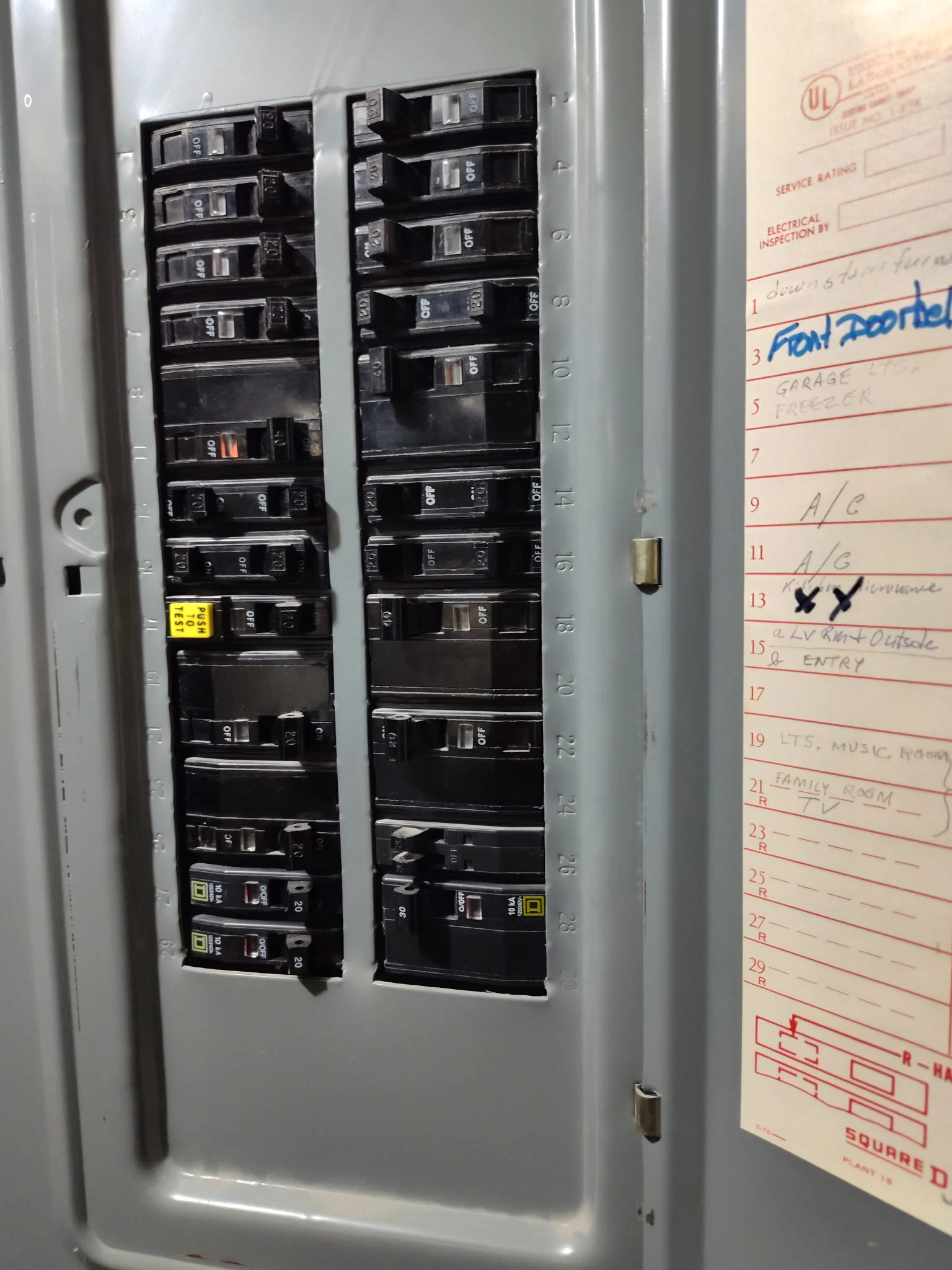
I have been a licensed electrician for over two decades, and the single most important thing I can tell Utah homeowners is this: your electrical panel is the heart of your home’s electrical system, and if it has a known defect, nothing else you do with your electrical system matters until you fix it.
This is not theoretical. There are panels installed in thousands of Utah homes right now that have documented failure rates. There is branch circuit wiring in neighborhoods across Utah County that creates fire risk at every outlet, switch, and junction box. And in older homes in Ogden, Salt Lake City, and Logan, there is wiring from the early 1900s that cannot safely carry modern electrical loads.
This article covers the three most common legacy electrical hazards I encounter in Northern Utah homes, what the actual risks are, and what your realistic options are for addressing each one.
Key Takeaways
- FPE Stab-Lok panels are linked to an estimated 2,800 fires and 13 deaths per year nationally, with some breaker types showing failure-to-trip rates above 50%.
- FPE and Zinsco panels are common in Utah homes built between the 1960s and 1980s, particularly in Lehi, Orem, Provo, and Davis County — replacement is the only safe option.
- Zinsco and GTE-Sylvania panels have a separate failure mode where breakers melt and fuse to the bus bar, making them unable to trip and creating progressive hotspots.
- Aluminum branch circuit wiring (installed 1965-1973) does not require a full rewire — AlumiConn or COPALUM pigtailing at every connection point is the code-approved remediation that addresses the fire risk.
- A full electrical panel replacement in a typical Utah home costs $1,800 to $3,500, with an upgrade from 100-amp to 200-amp service recommended when replacing older panels.
Federal Pacific Electric (FPE) Stab-Lok Panels
What They Are
Federal Pacific Electric was one of the largest manufacturers of residential circuit breaker panels in the United States from the 1950s through the early 1980s. Their “Stab-Lok” breaker design was installed in millions of homes across the country, including a large number of homes in Utah built during the construction booms of the 1960s and 1970s.
If your home in Lehi, Orem, Provo, or anywhere in Davis County was built between approximately 1960 and 1985, there is a meaningful chance it has an FPE Stab-Lok panel.
What the Problem Is
The fundamental purpose of a circuit breaker is to trip — to disconnect the circuit — when current exceeds a safe level. This is what prevents wires from overheating and starting fires. An FPE Stab-Lok breaker may not trip.
This is not speculation. Multiple independent testing programs, most notably a comprehensive study by the Consumer Product Safety Commission and follow-up testing by engineers, documented that FPE Stab-Lok breakers fail to trip at rates far exceeding any acceptable threshold. Some test samples showed failure-to-trip rates above 50 percent for certain breaker types.
The consequences are real. FPE Stab-Lok panels have been linked to an estimated 2,800 fires per year nationally and are associated with 13 deaths annually. Federal Pacific Electric was found to have fraudulently obtained UL listing for its products — they cheated on the certification testing.
How to Identify an FPE Stab-Lok Panel
Open your electrical panel door (the outer cover — do not remove the inner dead front) and look for:
- The name “Federal Pacific Electric” or “FPE” on the panel label
- The words “Stab-Lok” on the breakers themselves
- Breakers that are distinctively narrow and have a characteristic appearance — they are often red, orange, or have colored handles
The panel is typically located in the garage, basement, or a utility room. If you are not comfortable identifying it yourself, any licensed electrician can tell you in seconds.
What to Do About It
Replace the panel. There is no repair, retrofit, or workaround that makes an FPE Stab-Lok panel safe. The breakers themselves are the problem, and they cannot be replaced with reliable aftermarket breakers because the bus bar design (the “stab” connection) is also part of the issue — breakers may not seat properly and can appear to be connected when they are not.
A full panel replacement in a typical Utah home costs between $1,800 and $3,500 depending on the amperage, the condition of the existing wiring, and whether the service entrance needs to be upgraded at the same time. For a home built in the 1960s or 1970s, we often recommend upgrading from the original 100-amp service to 200 amps while we are at it, since you are already replacing the panel and the incremental cost is modest compared to doing it as a separate project later.
Zinsco and GTE-Sylvania Panels
What They Are
Zinsco panels were manufactured from the 1950s through the 1970s and were popular in residential construction across the western United States, including Utah. When Zinsco went out of business, GTE-Sylvania acquired the rights and continued producing similar panels for a time. You may see panels labeled “Zinsco,” “GTE-Sylvania,” or “Sylvania” — they all share the same core design issues.
What the Problem Is
Zinsco breakers have a documented tendency to melt and fuse to the bus bar. When a breaker fuses to the bus bar, it cannot trip. This is a different failure mode than FPE but the end result is the same: a breaker that cannot interrupt a fault, wires that overheat, and a fire that the panel was supposed to prevent.
The aluminum bus bars in Zinsco panels are also prone to degradation. Over time, the connection between the breaker and bus bar loosens, creating resistance, which creates heat, which causes more degradation. This is a progressive problem — the panel may work fine for years and then develop dangerous hotspots.
How to Identify a Zinsco Panel
Look for:
- The name “Zinsco”, “GTE-Sylvania”, or “Sylvania” on the panel label
- Breakers with a distinctive colorful appearance — Zinsco breakers came in multiple colors (red, blue, green, yellow) which is unusual for residential breakers
- A panel that has a slightly different form factor than modern panels
What to Do About It
Same answer as FPE: replace the panel. The failure mode is inherent to the design, and no amount of maintenance, tightening, or breaker replacement makes the panel safe. Cost and process are comparable to an FPE replacement.
Aluminum Branch Circuit Wiring
What It Is and Why Utah Has So Much of It
During the mid-1960s to early 1970s, copper prices spiked due to supply shortages related to the Vietnam War era. The electrical industry responded by substituting aluminum for copper in residential branch circuit wiring — the 15- and 20-amp circuits that serve your outlets, switches, and lights.
This was done across the country, but Utah County has notable concentrations because of the residential construction boom in cities like Orem, Provo, and Lehi during that exact period. If your home in these areas was built between approximately 1965 and 1973, there is a good chance some or all of the branch circuit wiring is aluminum.
What the Problem Is
Aluminum is a perfectly good conductor of electricity. The problem is not the wire itself — it is what happens at the connections. Aluminum expands and contracts more than copper when it heats and cools under load. Over time, this thermal cycling loosens the connection. Aluminum also oxidizes when exposed to air, and aluminum oxide is a poor conductor, which increases resistance at the connection point.
The result is a connection that gets progressively hotter each time the circuit is loaded. At an outlet where you plug in a space heater or a hair dryer, the connection behind the cover plate can reach temperatures that ignite the plastic device or the surrounding wood framing.
The CPSC estimated that homes with aluminum wiring are 55 times more likely to have one or more wire connections reach fire-hazard conditions than homes with copper wiring.
How to Identify Aluminum Wiring
The definitive way is to have an electrician inspect, but you can do a preliminary check:
- Look at the wiring where it enters your electrical panel. Aluminum wire is silver-colored; copper is copper-colored (though it may be dark with age).
- Look at the sheathing on your wiring in the attic or basement. Aluminum branch circuit wire often has “AL” or “ALUMINUM” printed on the outer jacket.
- Remove an outlet cover plate (with the circuit off) and look at the wire connected to the outlet. Silver-colored wire entering the device is likely aluminum.
What to Do About It
Here is the good news: aluminum wiring does not necessarily require a full rewire of your house. There are legitimate, code-approved remediation methods that address the fire risk at the connection points, which is where the actual hazard exists.
Option 1: CO/ALR-Rated Devices
Replace every outlet and switch in the house with devices rated “CO/ALR” (Copper/Aluminum Revised). These devices are specifically designed with connection mechanisms that accommodate aluminum wire’s expansion characteristics. This is the simplest approach, but it only addresses the devices themselves — it does not fix connections at junction boxes, the panel, or light fixtures.
Option 2: COPALUM Crimp Connectors
The CPSC’s recommended repair method. A COPALUM connector is a specialized crimp that permanently joins a short copper pigtail to each aluminum wire end. The copper pigtail then connects to standard copper-rated devices. This method requires a specific tool and trained installers. It is considered the gold standard but can be expensive because every single connection in the house needs to be addressed.
Option 3: AlumiConn Connectors
AlumiConn connectors are a set-screw lug connector specifically listed for aluminum-to-copper connections. They are more widely available than COPALUM and can be installed by any qualified electrician. Each aluminum wire gets a short copper pigtail attached via an AlumiConn lug, and the copper pigtail connects to the device.
For most Utah homeowners with aluminum wiring, we recommend a combination approach: AlumiConn pigtailing at all outlets, switches, and junction boxes, combined with CO/ALR-rated devices where practical. This addresses the fire risk at every connection point without the cost of rewiring the entire house.
A full rewire is the most thorough option but is typically only warranted if the home needs other major renovations that will open up walls, or if the aluminum wiring has additional issues such as damaged insulation or undersized circuits.
Knob-and-Tube Wiring
Where It Is in Northern Utah
Knob-and-tube (K&T) wiring was the standard residential wiring method from the 1890s through the 1940s. In Northern Utah, you find it in the older neighborhoods of Ogden (particularly the east bench and historic districts), Salt Lake City (the Avenues, Sugar House, and other pre-war neighborhoods), and Logan (the older residential areas near the university and downtown).
K&T wiring runs individual hot and neutral conductors through porcelain “knobs” (where the wire attaches to framing) and porcelain “tubes” (where the wire passes through framing members). The insulation is typically a rubberized cloth that has degraded significantly over the past 80 to 100+ years.
What the Problem Is
Knob-and-tube wiring has several issues:
- No ground wire. K&T is a two-wire system. There is no equipment grounding conductor, which means no ground prong on outlets and no ground fault protection unless GFCI devices are added.
- Degraded insulation. The original rubber and cloth insulation becomes brittle and crumbles with age. Exposed conductors in attics and wall cavities are a direct short-circuit and fire risk.
- Not designed for modern loads. K&T circuits are typically 15-amp circuits with relatively thin wire and limited capacity. A 1920s home was designed for a few lights and a radio. Today, we plug in air conditioners, microwaves, hair dryers, and home offices.
- Insulation contact hazard. K&T was designed to radiate heat into open air. When blown-in insulation (fiberglass, cellulose) covers K&T wiring in an attic, the wiring cannot dissipate heat and can overheat under load.
The Insurance Problem
This is often the issue that forces action. Insurance companies are increasingly refusing to write or renew homeowner’s policies on homes with active knob-and-tube wiring. If you are buying a pre-1950s home in Ogden or Salt Lake City and the inspection reveals active K&T, your insurance options may be severely limited and expensive.
Some insurers will write a policy if the K&T circuits have been verified as de-energized (abandoned in place with new wiring installed alongside). Others require full removal. The requirements vary by carrier, so check with your insurance agent.
What to Do About It
K&T wiring generally does need to be replaced, but the scope depends on the situation:
- If K&T is only in the attic and has been covered with insulation: At minimum, the insulation needs to be pulled back from the K&T conductors. Ideally, those circuits should be rewired.
- If K&T is active throughout the house: A full rewire is the best long-term solution. This typically costs $8,000 to $15,000+ for a standard older home, depending on size and accessibility.
- If K&T is present but has been partially replaced: An electrician needs to map what is still active and what has been abandoned. Partial rewiring may be sufficient.
Utah Code Context
Utah’s residential electrical code baseline is the 2014 National Electrical Code (NEC) as adopted through the 2015 International Residential Code (IRC). Here are the key modern requirements that older homes may not meet:
GFCI Protection Required:
- Kitchen countertop receptacles within 6 feet of the sink edge
- All bathroom receptacles
- All garage receptacles
- All exterior receptacles
- All unfinished basement receptacles
- All crawlspace receptacles
- Laundry area receptacles
AFCI Protection Required:
- All bedroom circuits (required since the 2002 NEC cycle)
- All living area circuits in new construction (bedrooms, living rooms, family rooms, dining rooms, hallways, closets, sunrooms)
Existing homes are not required to be retroactively brought up to current code unless work is being done on those circuits. However, when we replace an electrical panel, we typically bring the GFCI protection up to current standards as part of the project because it is minimal additional cost and significant additional safety.
Identifying Electrical Hazards by Era
The following table summarizes the most common legacy electrical hazards found in Northern Utah homes, organized by the era they were installed:
| Installation Era | System | Common Locations in Utah | Recommended Action |
|---|---|---|---|
| Pre-1950 | Knob-and-tube wiring | Ogden east bench, SLC Avenues, Sugar House, Logan | Inspect and plan replacement; verify insurance requirements |
| 1950s-1960s | FPE Stab-Lok panels | Lehi, Orem, Provo, Davis County | Replace immediately — documented fire hazard |
| 1960s-1970s | Zinsco / GTE-Sylvania panels | Western US construction, widespread in Utah | Replace immediately — breakers fuse to bus bar |
| 1965-1973 | Aluminum branch circuit wiring | Orem, Provo, Lehi (construction boom era) | Remediate connections with AlumiConn or COPALUM pigtailing |
| Post-1980 | Modern breaker panels | All areas | Maintain; inspect annually for hot spots and loose connections |
Practical Steps for Utah Homeowners
Step 1: Identify your panel. Open the panel door and read the manufacturer name. If it says Federal Pacific, FPE, Stab-Lok, Zinsco, GTE-Sylvania, or Sylvania, you need a panel replacement.
Step 2: Identify your wiring type. Check the wiring in your panel and in your attic or basement. Silver wire is aluminum. Wires running on porcelain knobs with cloth insulation is knob-and-tube.
Step 3: Test your GFCIs. Press the “TEST” button on every GFCI outlet in your home. The outlet should immediately lose power. Press “RESET” to restore. If a GFCI does not trip when tested, it needs to be replaced.
Step 4: Get a professional assessment. If you identified any of the issues in this article, schedule an inspection with a licensed electrician who can evaluate the full scope and give you realistic options and pricing.
The hazards described in this article are not emergencies in the sense that your house is about to catch fire tomorrow. But they are known, documented risks that increase the probability of a fire with every year that passes. An FPE panel that has worked fine for 40 years can fail tomorrow. An aluminum wiring connection that has been slowly loosening for decades can reach ignition temperature the next time someone plugs in a space heater.
These are problems with known solutions. If your home has any of these conditions, contact our electrical services team to schedule an evaluation. We work in Lehi, Orem, Provo, Ogden, Logan, and across the Wasatch Front. Call (385) 401-9490 to set up an appointment.
Topics