Whole-Home Surge Protection: Why Every Utah Home Needs It
Most people think of power surges as dramatic events — a lightning bolt hits a transformer and your television dies. That does happen, and we will talk about it. But the majority of damaging surges are smaller, more frequent events that you never notice individually but that degrade and eventually destroy the electronics in your home over months and years.
Along the Wasatch Front, we have a combination of factors that make surge protection more important than in many other parts of the country: summer thunderstorms that roll off the mountains with significant lightning activity, a utility grid that uses Public Safety Power Shutoffs during fire weather, dry winter air that amplifies static discharge, and a rapidly growing population that is straining electrical infrastructure. Every one of these creates conditions that send voltage spikes through your home’s wiring.
This article explains what power surges actually are, why Utah homes are particularly vulnerable, what whole-home surge protection does, and how it compares to the power strips most people rely on.
Key Takeaways
- Rocky Mountain Power Public Safety Power Shutoff (PSPS) events can last 24 to 72 hours, and grid re-energization after a PSPS creates voltage spikes that damage unprotected electronics.
- A Type 2 whole-home surge protector costs $200 to $500 installed at the main panel and protects every circuit in the home from a single installation point.
- Point-of-use power strip surge protectors (Type 3) alone are insufficient — they degrade silently over time, cannot handle large surges, and leave hardwired appliances like HVAC, water heaters, and garage door openers completely unprotected.
- Generator interlock kits cost $200 to $400 installed and are the safe alternative to “suicide cords” (male-to-male backfeed cords), which can electrocute utility workers and violate Utah code.
- EV charger installations (40-50 amp, 240V) frequently reveal that Utah homes built before 2000 have maxed-out 100-amp or 125-amp panels requiring a $2,500 to $4,500 upgrade to 200-amp service.
What a Power Surge Actually Is
Your home electrical system operates at 120 volts (for standard outlets) and 240 volts (for large appliances like dryers, ranges, and HVAC equipment). That voltage is not perfectly constant — it fluctuates slightly under normal conditions, and your appliances are designed to handle small variations.
A power surge is a voltage spike that significantly exceeds the normal operating voltage. Surges are measured in volts and in joules (the amount of energy in the spike). They range from small transient spikes of a few hundred volts lasting microseconds to massive events of thousands of volts.
Common causes of power surges:
- Lightning strikes: A direct or nearby lightning strike can send tens of thousands of volts through power lines, cable lines, and phone lines. Along the Wasatch foothills from Bountiful to Draper, summer afternoon thunderstorms are frequent and lightning is common.
- Utility grid switching: When Rocky Mountain Power switches load between substations, transforms power, or restores service after an outage, the transition can create voltage spikes. These are usually modest individually but happen regularly.
- Power restoration after outages: When power comes back on after an outage, the initial surge can exceed normal voltage significantly. This is particularly relevant for Utah because of PSPS events.
- Large appliance cycling: Every time your air conditioner compressor, refrigerator compressor, or well pump kicks on, it creates a small surge on your home’s electrical system. Over time, these internal surges damage sensitive electronics.
- Nearby construction or industrial loads: If you live near commercial or industrial areas, large motors starting up on the same distribution transformer can send surges into your home.
Why Utah Has Specific Surge Risk Factors
Rocky Mountain Power and Public Safety Power Shutoffs (PSPS)
Rocky Mountain Power, a subsidiary of PacifiCorp, provides electricity to approximately 90 percent of Utah. In recent years, they have implemented Public Safety Power Shutoffs (PSPS) during high-risk fire weather conditions — typically hot, dry, windy days in late summer and early fall.
During a PSPS event, Rocky Mountain Power de-energizes sections of the grid to prevent power lines from sparking wildfires. These shutoffs can last 24 to 72 hours depending on weather conditions.
Here is the surge risk: when power is restored after a PSPS event, the grid re-energization can create voltage spikes. Thousands of homes and businesses on a circuit come back online simultaneously. Transformers that have been cold re-energize with inrush current. The first few seconds to minutes of power restoration are when surges are most likely.
If your home does not have surge protection and you leave your electronics plugged in during a PSPS event (which most people do, because they expect the power to come back on), you are exposing every device in your home to potential damage during restoration.
Wasatch Front Thunderstorms
Utah’s geography creates a specific thunderstorm pattern during summer months. Moist air from the Great Salt Lake and from monsoon moisture flow interacts with the steep Wasatch Range, producing afternoon and evening thunderstorms that are localized but can be intense. Lightning from these storms strikes the foothills and canyons frequently.
A lightning strike does not need to hit your house or even your power line to cause a surge. A strike on a power line a mile away can propagate through the grid to your panel. A strike on the ground near a buried utility line can induce voltage in the line. These indirect strikes are actually more common than direct hits and are responsible for more cumulative damage.
Dry Winter Air and Static
Utah’s winters are famously dry. Indoor humidity in Wasatch Front homes routinely drops below 20 percent during January and February without supplemental humidification. Low humidity dramatically increases static electricity.
While a static discharge from your finger to a doorknob is annoying, the same phenomenon can damage sensitive electronics. Computer components, networking equipment, smart home devices, and modern appliance control boards are all vulnerable to static discharge. This is a less dramatic form of surge damage, but it is cumulative.
Running a whole-house humidifier during winter months (keeping indoor humidity between 30 and 45 percent) reduces static damage to electronics and has the added benefit of making your home more comfortable and reducing the survival time of airborne viruses.
What Whole-Home Surge Protection Is
A whole-home surge protector (technically a “Type 2 Surge Protective Device” or SPD) installs directly at your main electrical panel. It is wired to the bus bars inside the panel and monitors the incoming voltage on both legs of your 240-volt service.
When the device detects a voltage spike above its clamping voltage (typically 300-400 volts for a 120V system), it diverts the excess energy to the grounding system in nanoseconds. The surge energy is shunted to ground before it can reach the branch circuits in your home.
How It Differs from Power Strip Surge Protectors
The power strip surge protectors that most people use at their desks and entertainment centers are “Type 3” devices. They have a role, but they have significant limitations:
Power strip limitations:
- They only protect devices plugged into that specific strip
- They degrade over time — every surge they absorb reduces their remaining capacity, and most give no indication when they are depleted
- They cannot handle large surges (most are rated for 1,000 to 2,000 joules; a nearby lightning strike can deliver tens of thousands of joules)
- They only protect one circuit — your HVAC system, water heater, garage door opener, dishwasher, and washing machine are not plugged into power strips
- They do not protect against surges that enter through cable, phone, or ethernet lines
Whole-home surge protector advantages:
- Protects every circuit in your home from a single installation point
- Handles much larger surge events (quality units are rated for 50,000 to 100,000+ amps of surge current)
- Protects hardwired appliances and systems that cannot be plugged into strips
- LED indicators show protection status
- Most have a 10-year or lifetime connected equipment warranty
The ideal setup is a layered approach: a Type 2 whole-home protector at the panel handles the large events and reduces surges to manageable levels, while Type 3 point-of-use protectors at your most sensitive electronics provide an additional layer of fine protection.
Surge Protection Comparison
| Protection Level | Installation Location | Typical Cost | What It Protects |
|---|---|---|---|
| Type 1 (Utility) | Service entrance / utility meter | Installed by utility company | Entire grid feed from external surges |
| Type 2 (Whole-Home) | Main electrical panel | $200-$500 installed | All circuits in the home from a single point |
| Type 3 (Point-of-Use) | Individual outlet / power strip | $20-$80 per unit | Single outlet or device group only |
| Unprotected | None | $0 | Nothing — all electronics at risk from any surge event |
Installation and Cost
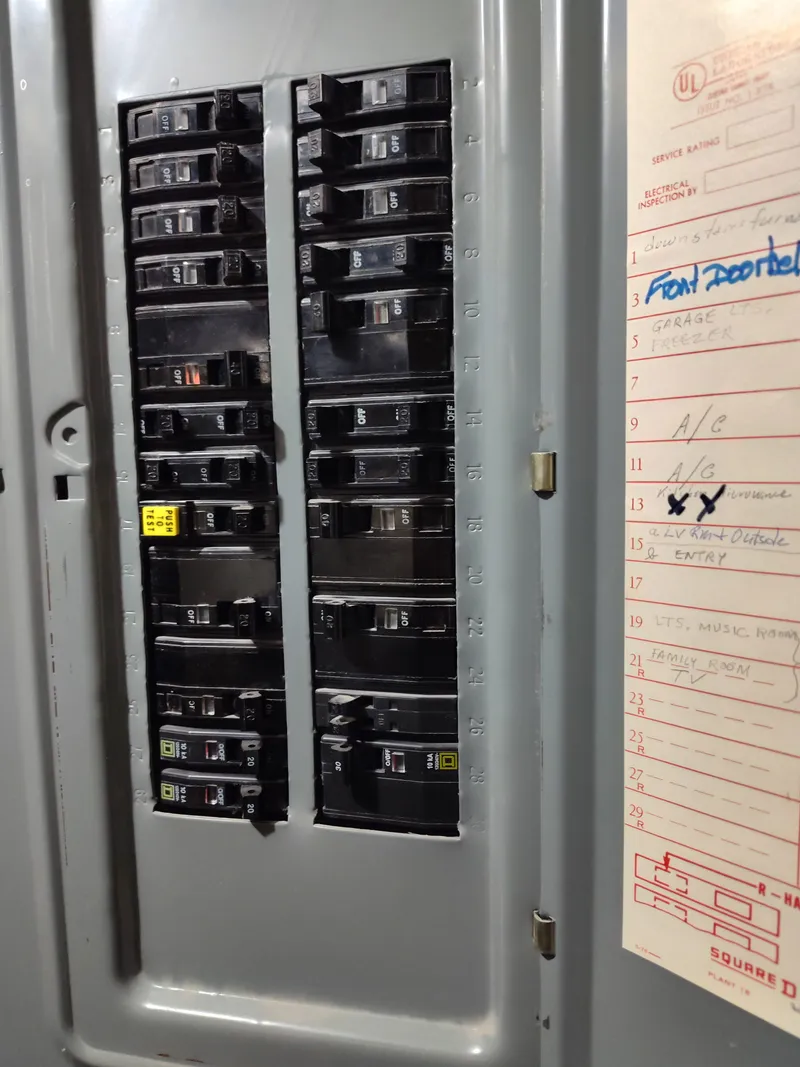
A Type 2 whole-home surge protector costs $200 to $500 installed, depending on the model and the specifics of your panel. The device itself costs $50 to $200 for residential models from manufacturers like Eaton, Siemens, Leviton, and Square D. Installation typically takes an electrician 30 to 60 minutes.
The installation involves:
- Mounting the surge protector on or adjacent to the panel
- Connecting the device’s leads to two breaker positions in the panel (or to a dedicated 2-pole breaker)
- Connecting the device’s ground lead to the panel’s grounding system
- Verifying the panel’s grounding system is adequate (more on this below)
Important note about grounding: A surge protector is only as good as the grounding system it diverts energy to. If your home’s grounding electrode system is inadequate — which is common in older Utah homes — the surge protector cannot do its job effectively. Part of the installation should include verifying that your grounding electrode conductor, grounding rod, and panel bonding are all correct.
What to Look for in a Whole-Home Surge Protector
Not all surge protectors are equal. Here is what matters:
- Surge current rating (kA): This is the maximum surge current the device can handle. For residential use, look for at least 50kA. Higher is better.
- Clamping voltage: The voltage level at which the device activates. Lower is better — 400V or less for a 120/240V system.
- UL 1449 Type 2 listing: Make sure the device is UL listed as a Type 2 SPD. This ensures it has been tested to specific safety standards.
- Indicator lights: The device should have visible LED indicators showing that protection is active. When the protection components are depleted, the light changes or goes out.
- Warranty: Quality SPDs come with a warranty on the device and often on connected equipment up to a certain dollar amount.
Generator Safety: Interlock Kits vs. Suicide Cords
Power outages — whether from storms, PSPS events, or grid issues — lead many Utah homeowners to use portable generators. This is reasonable, but how you connect that generator to your home matters enormously for safety, both yours and your neighbors’.
The Dangerous Way: Backfeed Cords
A “suicide cord” (also called a backfeed cord or male-to-male cord) is an extension cord with male plugs on both ends. People use them to plug a generator into a wall outlet, which energizes circuits in the home through the panel.
This is extraordinarily dangerous for two reasons:
- It can kill utility workers. When you backfeed your panel, you are sending voltage out through your electric meter and onto the utility lines. A lineworker repairing a downed line that they believe is de-energized can be electrocuted by your generator. This is not theoretical — it has killed people.
- It can electrocute you. A cord with two exposed male prongs on one end is a live electrocution hazard while plugged into the generator.
Backfeeding through a suicide cord violates the National Electrical Code and Utah code. It is also illegal in most jurisdictions.
The Safe Way: Generator Interlock Kits
A generator interlock kit is a mechanical device that installs on your electrical panel and physically prevents the main breaker and the generator breaker from being on at the same time. When you want to run on generator power:
- Turn off the main breaker (disconnecting your home from the utility grid)
- Slide the interlock plate to allow the generator breaker to turn on
- Start the generator and turn on the generator breaker
- Selectively turn on the branch circuit breakers you want to power
The interlock kit makes it mechanically impossible to have the main breaker and generator breaker on simultaneously, which eliminates the backfeed hazard.
Cost: $200 to $400 installed, including the interlock kit, an inlet box on the exterior of the house, and the wiring between the inlet and a dedicated breaker in the panel. This is a one-time installation that serves you for the life of the home.
For homeowners who want seamless automatic backup, a transfer switch (manual or automatic) is the step up from an interlock kit. Automatic transfer switches are what whole-home standby generators use — they detect the power outage and switch to generator power without any human intervention.
EV Chargers and the Panel Capacity Issue
Electric vehicle adoption in Utah is growing rapidly, and installing a Level 2 EV charger (240V, typically 40 to 50 amps) is one of the most common electrical service requests we handle. But EV charger installation often reveals a problem that homeowners did not know they had: an electrical panel that is at or near its capacity limit.
Many Utah homes, particularly those built before 2000, have 100-amp or 125-amp electrical service. A modern home with central air conditioning, an electric range, an electric dryer, and an electric water heater may already be using 80 to 90 percent of that capacity. Adding a 50-amp EV charger circuit can push the calculated load over the panel’s rating.
When this happens, the options are:
- Panel upgrade to 200 amps: This involves replacing the panel, the service entrance cable, and potentially the meter base. Cost is typically $2,500 to $4,500. While you are at it, adding a whole-home surge protector is minimal additional expense.
- Load management device: Some EV chargers and aftermarket devices can manage charging to stay within your panel’s capacity — for example, reducing the charge rate when the air conditioner is running. This can avoid a panel upgrade in some cases.
- Time-of-use charging: Charging your EV at night when other loads are off (no AC, no cooking, no laundry) may keep you within your existing panel capacity, though this does not change the calculated load on paper.
If you are considering an EV charger, have your panel evaluated first. We can do a load calculation to determine whether your existing service can support a charger or whether you need an upgrade.
Protecting Specific High-Value Systems
Beyond the general whole-home protector, certain systems in your home may warrant additional protection:
HVAC equipment: A modern furnace or air conditioner has a control board that costs $300 to $800 to replace. A surge that damages the control board can leave you without heat or cooling. Whole-home surge protection covers this, but some HVAC manufacturers also make dedicated surge protectors for outdoor condensing units, which provide an additional layer at the equipment.
Well pumps: If you are on a well in Heber Valley, Morgan County, or rural areas of Davis or Weber counties, your well pump is expensive and difficult to replace. A surge that burns out a submersible well pump means no water until a well service company can pull the pump, which is a $2,000+ job. Protecting the well pump circuit with both a whole-home SPD and a dedicated point-of-use protector is worthwhile.
Home office equipment: If you work from home, your computer, monitors, networking equipment, and NAS drives are your livelihood. A layered surge protection approach (whole-home SPD plus a quality UPS/surge protector at your desk) protects both against large external surges and smaller internal transients.
Smart home systems and low-voltage equipment: Security cameras, smart thermostats, network switches, and similar devices are sensitive and often not replaceable quickly. Many of these are connected via ethernet, which can carry surges. Ethernet surge protectors at the point of entry are inexpensive and effective.
What to Do Now
Here is a prioritized action list:
-
Install a whole-home surge protector. This is the single most impactful upgrade for $200 to $500. It protects everything in your home from the most common and most damaging surge events.
-
Check your grounding system. If your home is older than 1990, have an electrician verify that your grounding electrode system meets current code. An inadequate ground makes your surge protector less effective.
-
Assess your panel capacity. If you are planning to add an EV charger, hot tub, workshop, or other significant electrical load, get a load calculation done before you buy the equipment.
-
If you use a portable generator, install an interlock kit. For $200 to $400, you eliminate a serious safety hazard and make generator use more practical and convenient.
-
Add point-of-use protection at sensitive electronics. Quality UPS (uninterruptible power supply) units for your computer and network equipment provide both surge protection and battery backup during short outages.
-
Consider a whole-house humidifier for winter. Maintaining 30 to 45 percent indoor humidity reduces static damage to electronics and improves comfort. These install on your furnace and cost $400 to $800 installed.
Our electrical services team installs whole-home surge protectors, generator interlock kits, EV charger circuits, and panel upgrades across Northern Utah. If you want to protect your home’s electrical systems from the surge events that are common along the Wasatch Front, contact us or call (385) 401-9490 to schedule a visit.
Your home’s electronics represent thousands of dollars of investment. A $300 surge protector that lasts a decade is the most cost-effective insurance you can buy for them.
Topics