Protecting Your Pipes: Frost Depth, Stop-and-Waste Valves & Winter Plumbing in Utah
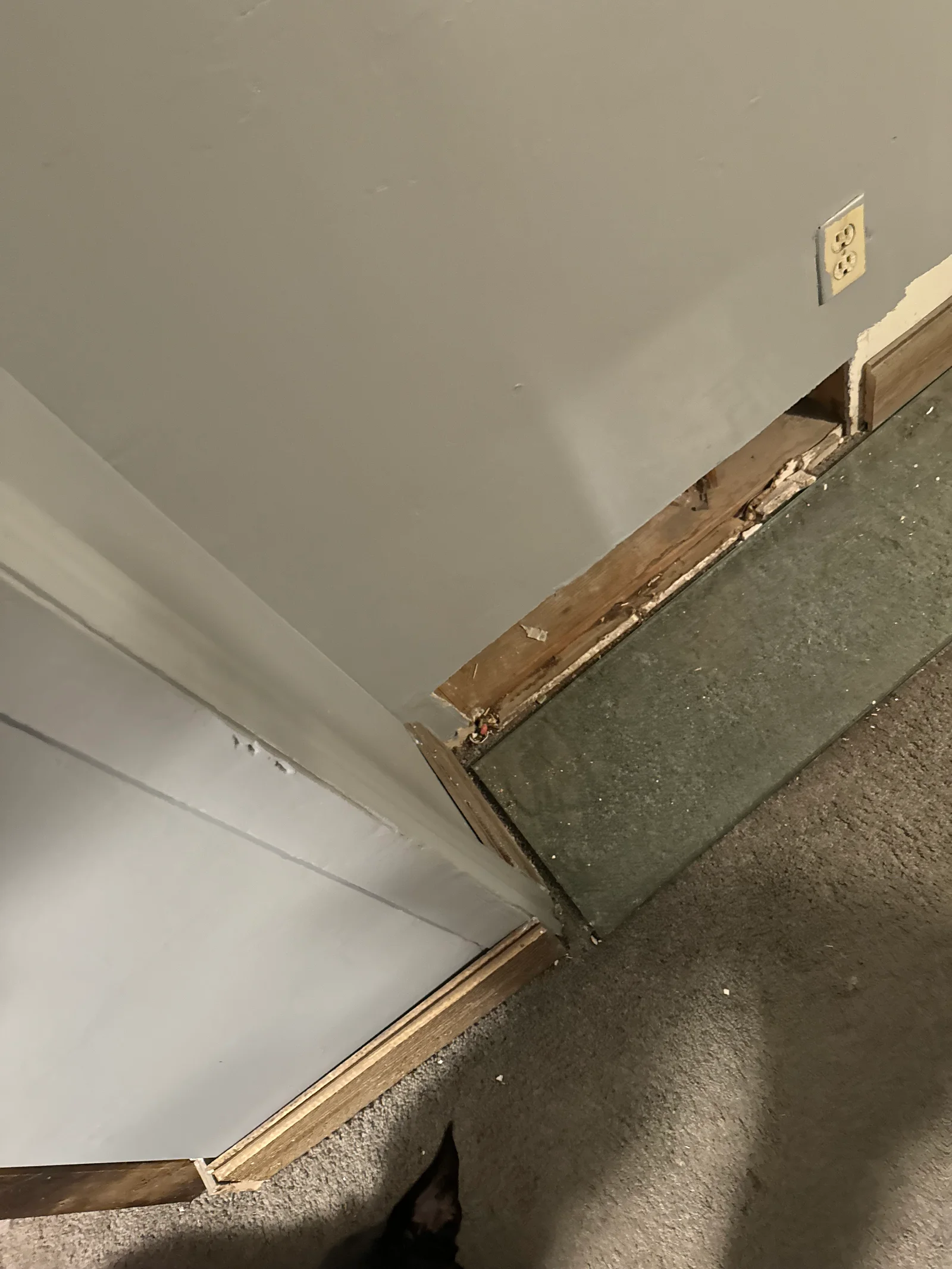
Every winter along the Wasatch Front, I get emergency calls from homeowners dealing with burst pipes, flooded rooms, and no water to the house. In most cases, the damage was entirely preventable. The problem isn’t that Utah winters are unpredictable — they’re actually very predictable. The problem is that many homeowners don’t understand how their plumbing system is designed to handle freezing temperatures, and they miss the simple steps that keep everything working.
Utah has some unique plumbing features that you won’t find in warmer climates — stop-and-waste valves chief among them. If you’ve moved here from somewhere else, or if you’ve simply never had a reason to think about what’s happening underground, this article will walk you through the essentials: frost depth, pipe protection, the stop-and-waste valve system, frost-free hose bibs, and what to do if something does freeze.
Key Takeaways
- Utah’s frost line is approximately 36 inches on the Wasatch Front, with mountain communities like Park City and Heber reaching 48-60+ inches.
- Frost-free hose bibs only prevent freezing if the garden hose is disconnected — a connected hose traps water in the tube, which freezes and splits the pipe inside the wall.
- Stop-and-waste valves are a Utah-specific buried shut-off that both stops water flow and drains the pipe above it, preventing freeze damage when you travel in winter.
- Keep your thermostat at or above 55 degrees F when away during cold months to prevent pipes from freezing inside the home.
Understanding Utah’s Frost Line
The frost line (also called frost depth) is the maximum depth at which ground moisture is expected to freeze during winter. Any water supply pipe buried above this depth is at risk of freezing. The frost line varies by location, primarily driven by average winter temperatures and soil conditions.
Along the Wasatch Front — Salt Lake City, Bountiful, Layton, Ogden, Provo — the frost line sits at approximately 36 inches (3 feet).
However, this number isn’t universal across all of Northern Utah:
- Valley floor communities (Salt Lake City proper, West Valley, Murray, West Jordan): approximately 30-36 inches
- Bench and foothill communities (the Avenues, East Millcreek, Holladay, Draper bench): 36-42 inches due to higher elevation and colder nighttime temperatures
- Mountain communities (Park City, Heber, Midway, Eden): 42-60+ inches depending on elevation and exposure
- Cache Valley (Logan, Smithfield, Providence): 40-48 inches due to the cold air inversions and sustained low temperatures
Frost Depth by Region in Northern Utah
| Region | Typical Frost Depth | Minimum Pipe Burial Depth (frost + 6”) | Examples |
|---|---|---|---|
| Valley floor | 30-36 inches | 36-42 inches | Salt Lake City, West Valley, Murray, West Jordan |
| Bench / Foothill | 36-42 inches | 42-48 inches | The Avenues, East Millcreek, Holladay, Draper bench |
| Mountain communities | 42-60+ inches | 48-66+ inches | Park City, Heber, Midway, Eden |
| Cache Valley | 40-48 inches | 46-54 inches | Logan, Smithfield, Providence |
Utah plumbing code requires water supply lines to be buried a minimum of 12 inches below grade AND at least 6 inches below the local frost line. So along the Wasatch Front, that means your main water supply should be at least 42 inches deep — 36 inches of frost depth plus 6 inches of safety margin.
Most municipal water mains in our area are buried 4-5 feet deep, well below the frost line. Your water service line (the pipe connecting the main to your house) should also be at this depth. Problems arise at transition points — where the supply line comes up to enter the house, at meter pits, and at any point where pipes are shallower than they should be due to settling, erosion, or improper original installation.
What Happens When Pipes Freeze
Understanding the physics helps you understand why prevention matters so much.
When water freezes, it expands by about 9%. In a rigid pipe — whether copper, PVC, CPVC, or galvanized steel — this expansion creates enormous pressure. But here’s the part most people get wrong: the pipe doesn’t burst at the point where the ice forms. The ice creates a plug, and continued expansion of freezing water between the ice plug and a closed fixture (like a faucet or valve) generates hydrostatic pressure that can reach hundreds of pounds per square inch. The pipe fails at its weakest point, which might be feet or even a full story away from where the actual ice blockage is.
This is why a pipe that freezes in an exterior wall can burst inside a wall cavity deeper in the house. It’s also why you might not discover the damage until the ice thaws and water starts flowing from the split.
Common locations for frozen pipes in Utah homes:
- Exterior walls, especially north-facing walls with plumbing runs
- Unheated garages where supply lines to a utility sink or washing machine are exposed
- Crawl spaces — particularly vented crawl spaces that allow frigid air circulation
- Attic spaces where supply lines to upper-floor bathrooms may run
- Hose bibs (outdoor faucets) — by far the most common freeze-failure point
- The meter pit — especially during extreme cold snaps below 0 degrees F
The Stop-and-Waste Valve: Utah’s Unique Plumbing Feature
If you’re from out of state, you may never have heard of a stop-and-waste valve. In Utah and other cold-climate western states, they’re a standard part of residential plumbing.
A stop-and-waste valve is a buried shut-off valve, typically installed on the water service line between the water meter and the house. When you close it, it not only stops the flow of water but also opens a small drain port that allows the water in the pipe above (toward the house) to drain out. “Stop” the water, “waste” (drain) the remaining water from the vulnerable portion of the pipe.
Why this matters: When you leave for vacation in January, or when you need to shut off water to the house for any reason during freezing weather, a standard shut-off valve would leave the pipe full of stagnant water that could freeze. A stop-and-waste valve drains that water, leaving the pipe empty and freeze-proof.
Where to Find Yours
Your stop-and-waste valve is typically located in a valve box (a round or rectangular lid in the ground) in your front yard, usually between the sidewalk and the house, near the water meter. Some homes have the stop-and-waste in the same pit as the meter; others have a separate valve box.
Every homeowner should know where their stop-and-waste valve is and how to operate it. Here’s how to find it:
- Look for a metal or plastic lid in the ground in your front yard, typically 4-8 inches in diameter
- Open the lid — you may need a screwdriver or a valve key
- Inside you’ll see a valve stem, usually requiring a long-handled valve key (available at hardware stores for about $10-15) to operate
- The valve turns 90 degrees (quarter-turn for ball-type) or several turns (for gate-type)
If you can’t find your stop-and-waste valve, it may be buried under soil, landscaping, or even concrete that was placed over it (this happens more often than you’d think). A plumber with a metal detector can usually locate it. It’s worth finding before you need it in an emergency.
How to Use It Properly
Shutting off for winter travel or extended absence:
- Close the stop-and-waste valve using a valve key
- Go inside and open the lowest faucet in the house (usually a basement laundry sink or utility faucet) to allow air into the lines
- Open a few other faucets throughout the house to drain the system
- The drain port on the stop-and-waste valve will release the water from the service line below the frost line
Important note: The drain port on a stop-and-waste valve allows water to seep into the surrounding soil. If your valve box frequently fills with water, the drain port may be functioning normally — it’s by design. However, if the box is flooded during warm weather when the valve is open, you may have a leak in the service line that needs attention.
Turning back on after being away:
- Close all faucets in the house that you opened
- Open the stop-and-waste valve slowly
- Go inside and open faucets one at a time, starting at the lowest point, to bleed air from the lines
- Check for any leaks before leaving the system unattended
Frost-Free Hose Bibs: They’re Only Frost-Free If You Do Your Part
Most homes built or updated in the last 30 years in Northern Utah have frost-free hose bibs (also called frost-proof sillcocks or anti-siphon hose bibs). These are designed so that the actual valve mechanism — where water flow starts and stops — is located 6-12 inches back inside the wall, in heated space, while the handle and hose connection are outside.
When you turn off a frost-free hose bib, the water stops flowing inside the warm wall, and the small amount of water remaining in the outer tube drains out through the spout. Clever design. But it only works under one critical condition:
You must disconnect the hose.
If a hose is left connected to a frost-free hose bib, water can’t drain from the outer tube. That trapped water freezes, expands, and splits the tube — usually the inner copper tube that runs inside the wall. You won’t know it’s broken until spring, when you turn the hose bib back on and water sprays inside your wall cavity.
This is one of the most common plumbing failures I repair in Northern Utah, and it is 100% preventable. Every fall, before the first hard freeze:
- Disconnect all hoses from every hose bib on the house
- Open each hose bib to let any remaining water drain
- Leave the hose bib in the open position for a moment, then close it — this ensures the tube has drained
- Store hoses in the garage or shed — leaving them connected “just for convenience” defeats the entire frost-free design
If your home has older hose bibs that aren’t frost-free, you should install insulated hose bib covers (available at any hardware store for $3-5 each) in addition to disconnecting hoses. Better yet, have them upgraded to frost-free models — it’s a relatively inexpensive improvement that prevents a very expensive problem.
Backflow Preventers and Vacuum Breakers
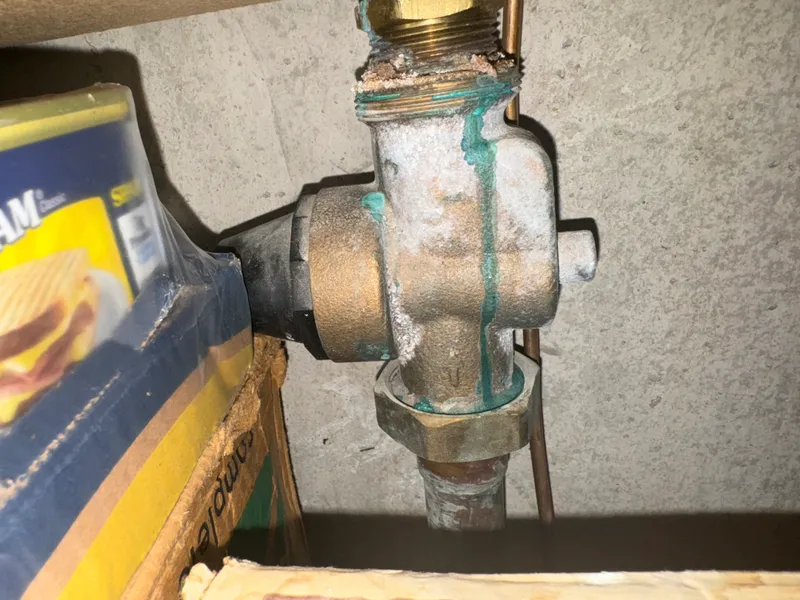
If your home has a sprinkler system, you have backflow prevention devices — likely either a pressure vacuum breaker (PVB) or a reduced-pressure zone (RPZ) assembly. These are typically mounted above ground on the exterior of the house or in a mechanical room.
These devices are extremely vulnerable to freeze damage because they contain water in chambers that can’t drain easily. A frozen backflow preventer can crack its body, damage internal check valves, and cost $200-$500+ to repair or replace.
Before winter each year:
- Shut off the water supply to the backflow preventer using the upstream shut-off valve
- Open the test cocks (small petcocks on the device) to drain remaining water
- Open the relief valve if present
- If the device is removable, consider removing it and storing it indoors
- If it remains installed, insulate it with a backflow preventer cover or wrap it with insulation and a waterproof cover
Your secondary irrigation water system should already be off by the time freezing temperatures arrive (see our article on secondary irrigation water in Utah), but make sure the backflow preventer on that system is also properly winterized.
Preventing Frozen Pipes: Practical Steps
Beyond the stop-and-waste valve and hose bib basics, here are the practical prevention measures every Utah homeowner should implement:
Before Winter
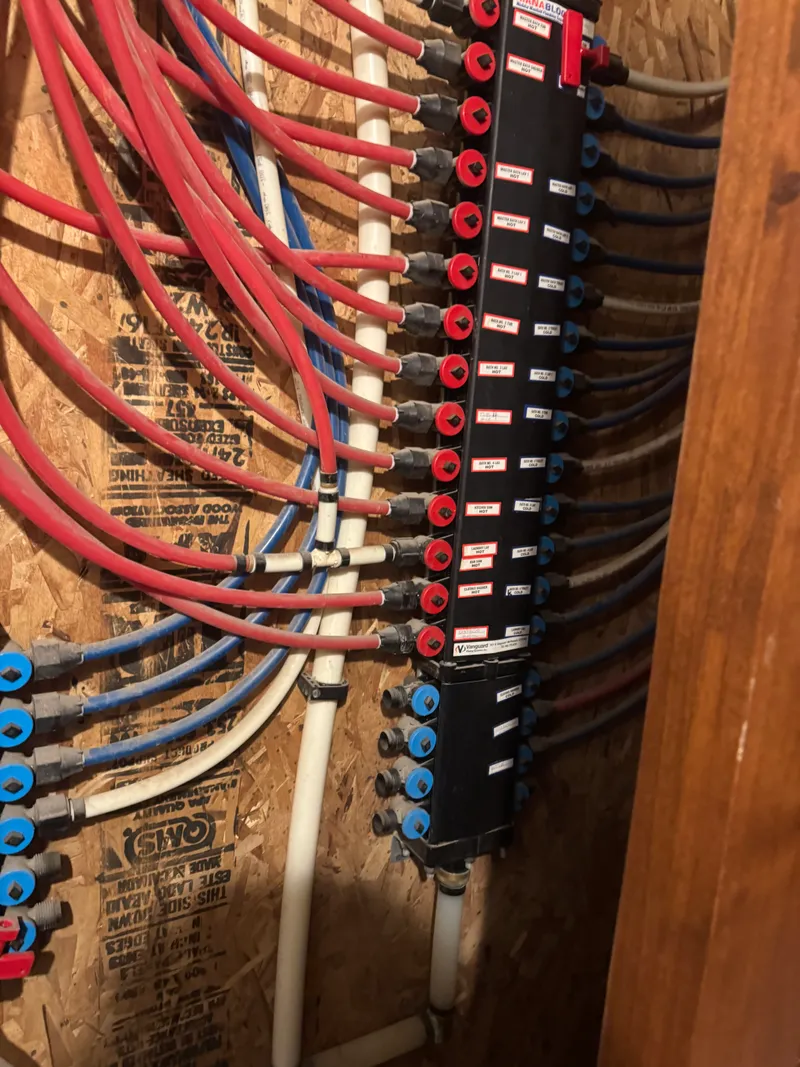
- Insulate exposed pipes in crawl spaces, garages, and attics. Foam pipe insulation is inexpensive and easy to install. Pay special attention to any pipe within 18 inches of an exterior wall or in an unheated space.
- Seal air leaks around pipe penetrations in exterior walls. Cold air drafts are often what push a pipe from cold to frozen.
- Know your vulnerable spots. If you’ve lived in the home through a winter, you probably already know which faucets slow down or stop during extreme cold. Those are the runs that need additional protection.
- Service your water heater. A functional water heater keeps warm water circulating through supply lines. A failed water heater in January is a pipe-freezing risk.
During Cold Snaps (Below 10 Degrees F)
When overnight lows drop below about 10 degrees F, or during sustained cold periods, take these additional precautions:
- Open cabinet doors under sinks on exterior walls to allow warm room air to reach the pipes
- Let faucets drip — a slow drip on both hot and cold lines keeps water moving and prevents the pressure buildup that causes burst pipes. Even a trickle is enough. Focus on faucets at the end of long supply runs and those on exterior walls.
- Maintain heat in the home. Don’t set the thermostat below 55 degrees F, even if you’re away. The cost of heating is trivial compared to the cost of a burst pipe.
- If you have a crawl space, make sure vents are closed during extreme cold. Some homes have automatic crawl space vent covers; others need to be manually closed.
- Garage doors — if there’s plumbing in your garage (water heater, utility sink, washing machine), keep the garage door closed. An open garage door in sub-zero weather will freeze pipes in hours.
If You’re Leaving for Extended Travel in Winter
If you’re heading south for the winter or taking a multi-week trip during cold months:
- Shut off the stop-and-waste valve and drain the system as described above
- Have someone check on the house every day or two, or install a water leak sensor/smart shut-off valve that can alert you remotely
- Keep the heat on — set the thermostat to at least 55 degrees F even with the water off, to protect other elements of the home
- Consider draining the water heater if you’ll be gone for more than a month. Sediment settling in a stagnant tank for weeks isn’t great for it, and an empty tank in an unoccupied house eliminates one more water damage risk.
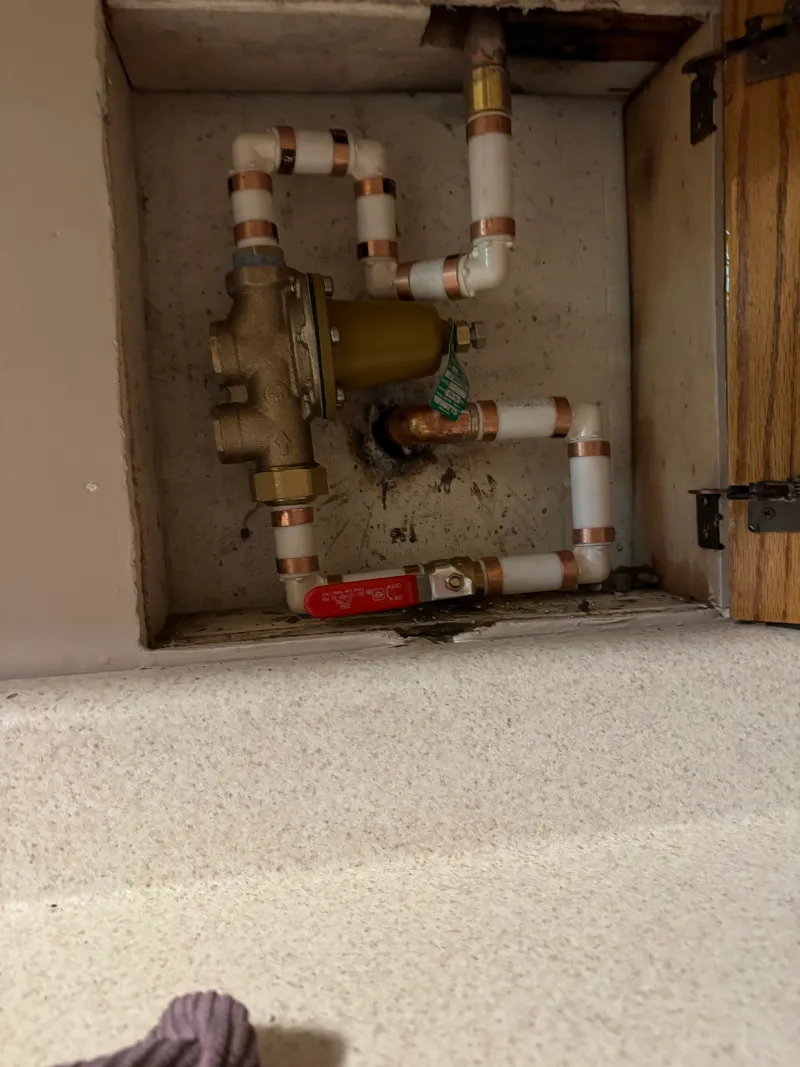
What to Do If a Pipe Freezes
If you turn on a faucet and nothing comes out during cold weather, you likely have a frozen pipe. Here’s what to do:
-
Shut off the water at the stop-and-waste valve immediately. If the pipe has already split, you’ll prevent flooding when the ice thaws.
-
Open the affected faucet to allow water to flow once the ice begins to melt.
-
Attempt to thaw the pipe gently if you can access it. Use a hair dryer, heat lamp, space heater pointed at the area, or towels soaked in hot water wrapped around the pipe. Never use a torch, propane heater, or open flame — this is a fire hazard and can also cause the water to boil in the pipe, creating a steam explosion.
-
Work from the faucet toward the frozen section. This allows water and steam to escape through the open faucet as you thaw.
-
If you can’t locate or access the frozen section, or if you suspect the pipe has already burst, call a plumber. We can locate the blockage, thaw it safely, and repair any damage.
-
After thawing, inspect for leaks. Turn the stop-and-waste valve back on slowly and check every visible pipe and fixture for leaks. Remember — the burst may not be where the ice was. Check ceiling tiles, wall surfaces, and any pipe you can see for dripping, spraying, or damp spots.
Elevation Matters: A Note for Mountain Communities
If you live in Park City, Heber, Midway, Kamas, Eden, Huntsville, or other mountain communities, your winter plumbing risks are significantly higher than valley-floor homes. Temperatures regularly drop below zero, frost depth extends to 4-5 feet, and prolonged cold spells are common.
In these communities:
- Pipe insulation isn’t optional — it’s mandatory
- Heat tape (electric pipe heating cable) may be necessary on vulnerable runs
- Stop-and-waste valves should be exercised and checked annually before winter
- Homes with vented crawl spaces should have those vents closed and the crawl space insulated
- Water service lines should be verified at proper depth — older mountain homes sometimes have service lines that were trenched too shallow
Frequently Asked Questions
Can I just pour hot water on a frozen pipe to thaw it? You can pour warm (not boiling) water on an accessible frozen pipe, and wrapping the pipe with towels soaked in hot water works well. Avoid pouring boiling water directly on a cold pipe — the thermal shock can crack copper or PVC. Gradual warming is always the right approach.
My water meter is in a pit in my yard and it froze. What do I do? Contact your water utility — the meter is typically their property and their responsibility. In the meantime, you can try placing an incandescent light bulb (they generate heat, unlike LEDs) in the meter pit with the lid slightly ajar to warm the area. Don’t use any open flame or device that could generate carbon monoxide in the pit. Insulating the meter pit lid with rigid foam insulation before the next winter can help prevent a recurrence.
How much does it cost to repair a burst pipe? It depends entirely on location and accessibility. An exposed burst pipe in a mechanical room might be $150-$400 to repair. A pipe that burst inside a finished wall, requiring drywall removal, repair, and restoration? That can quickly reach $1,000-$3,000+, not counting any water damage to flooring, belongings, or finishes. Prevention really is worth the effort.
Do I need to drip all my faucets, or just certain ones? Focus on faucets served by pipes that run through or along exterior walls, in unheated spaces, or at the end of long supply runs (farthest from the water heater and main supply). You don’t typically need to drip faucets on interior walls in well-insulated homes. When in doubt, drip it — the cost of the water is pennies.
Don’t Wait for the Emergency
Winter plumbing emergencies are stressful, expensive, and in most cases preventable. Spend an hour this fall locating your stop-and-waste valve, disconnecting your hoses, insulating exposed pipes, and winterizing your backflow preventers. That one hour of preparation can save you thousands in repairs and the headache of dealing with water damage in the middle of January.
If you need help locating your stop-and-waste valve, winterizing your plumbing system, or dealing with pipes that have already frozen, our plumbing team responds to emergency calls across the Wasatch Front, from Ogden to Provo.
Call us at (385) 401-9490. We’d rather help you prepare than repair — but we’re here for both.
Topics