Tank vs. Tankless Water Heaters in Utah: Which Is Right for Your Home?
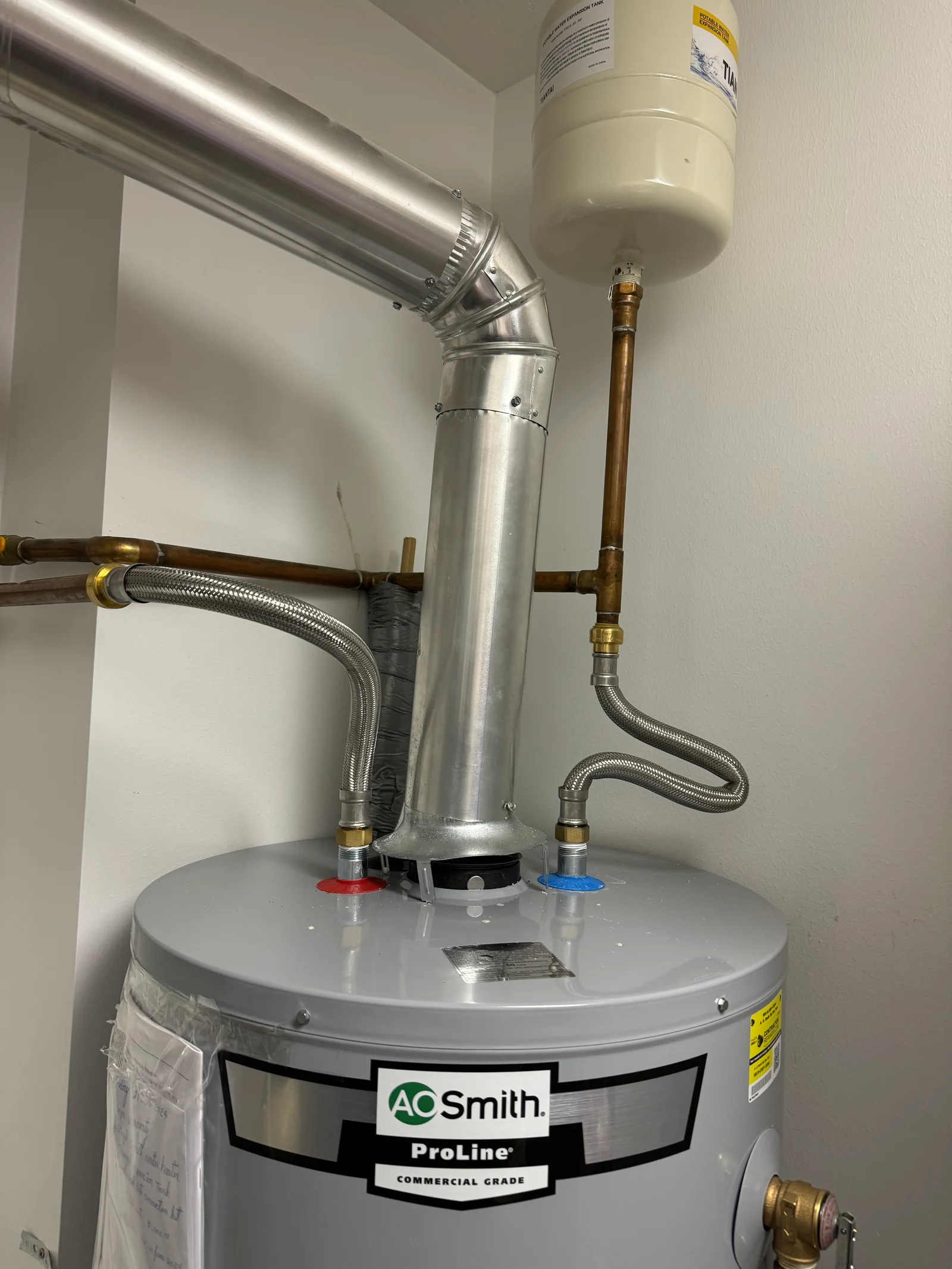
Replacing a water heater is one of the biggest plumbing decisions a homeowner makes, and in Northern Utah it comes with complications that most online comparison guides completely ignore. Our water is among the hardest in the country. Our elevation changes how gas appliances burn fuel. Our winter ground temperatures drop incoming water to 35-45 degrees Fahrenheit, which affects how much hot water any system can actually produce when you need it most.
I have installed hundreds of both tank and tankless water heaters across the Wasatch Front — from Ogden and Layton down through Salt Lake City, West Jordan, and Provo. I have seen what lasts, what fails, and why. This article is the comparison I wish every homeowner would read before making the call, because the right choice depends almost entirely on factors specific to where you live.
Key Takeaways
- In Northern Utah, a tank water heater costs $800-$1,500 installed and lasts 6-9 years without a water softener, or 12-15 years with one. A tankless unit costs $2,500-$4,500 installed and can last 20+ years with proper maintenance.
- Hard water is the single biggest factor in this decision. Without a softener, tankless units require annual descaling at $150-$200 per visit to avoid voiding the warranty and cracking the heat exchanger.
- Utah’s winter incoming water temperatures (35-45 degrees Fahrenheit) reduce tankless output by 20-30%, meaning you may need a larger unit than what is recommended for homes in warmer climates.
- Altitude above 4,000 feet requires adjustments for both types, but tankless units need specific DIP switch or firmware settings that many installers overlook.
- If you have a water softener or plan to install one, tankless is the better long-term investment. Without a softener, a quality tank unit with annual flushing is more practical for most Northern Utah homes.
Why This Comparison Is Different in Utah
Most tank-versus-tankless articles online are written for a national audience. They compare costs and efficiency numbers based on average water conditions, moderate climates, and sea-level installations. None of those assumptions apply here.
Northern Utah has three conditions that fundamentally change the math on water heaters:
Hard water. The Wasatch Front sits on the ancient lakebed of Lake Bonneville, and our municipal water carries 12 to 33+ grains per gallon of dissolved calcium and magnesium. That mineral content destroys water heaters from the inside. It shortens tank life by nearly half and clogs the narrow passages inside tankless heat exchangers. If you have not read our deep dive on this topic, the article on hard water in Northern Utah covers the full picture.
Altitude. Most of the Wasatch Front sits between 4,200 and 5,500 feet, with communities like Heber City at 5,600 feet and Park City above 7,000 feet. At these elevations, there is less oxygen per cubic foot of air. Gas-fired appliances — both tank and tankless — must be derated and adjusted for altitude, or they burn fuel inefficiently and produce elevated carbon monoxide. Our article on gas appliance altitude adjustments explains why this matters.
Cold incoming water. In January and February, ground temperatures along the Wasatch Front drop the incoming water supply to 35-45 degrees Fahrenheit. A water heater in Phoenix might receive 65-degree water year-round. Ours has to work much harder, especially in winter, and that temperature gap directly affects how much hot water a tankless unit can deliver per minute.
These three factors do not just tilt the comparison — they can flip it entirely depending on your specific home setup.
Tank Water Heaters: How They Work
A tank water heater is simple and proven. A large insulated tank — typically 40 or 50 gallons for a residential home — holds water that is continuously heated by a gas burner at the bottom (or electric elements, though gas is far more common in Utah). A thermostat monitors the water temperature and fires the burner whenever it drops below the set point. Hot water is drawn from the top of the tank when you open a faucet, and cold water enters at the bottom to replace it.
The system is always on. Even when nobody is using hot water, the burner fires periodically to maintain temperature because heat naturally escapes through the tank walls. This is called standby energy loss, and it is the primary efficiency disadvantage of a tank unit.
Pros of Tank Water Heaters
Lower upfront cost. A quality 50-gallon gas tank water heater, professionally installed with proper altitude adjustment, typically runs $800 to $1,500 in Northern Utah. The unit itself is relatively inexpensive, and installation is straightforward for a licensed plumber familiar with local code requirements.
Simplicity and reliability. Tank water heaters have been around for over a century. There are no circuit boards, no electronic ignition sequences to troubleshoot (on most standard models), and no complex error codes. When something goes wrong, diagnosis is usually straightforward. Parts are widely available and affordable.
Works at altitude without electronic adjustment. Gas tank water heaters need the correct orifice for altitude — a mechanical swap that any competent installer handles during setup. There are no DIP switches or firmware parameters to configure. It is a simpler adjustment with less room for installer error.
Adequate for most household patterns. A 50-gallon tank provides enough hot water for most families of 3-5 people for typical sequential use — a couple of showers, running the dishwasher, a load of laundry. It is only when multiple high-demand fixtures run simultaneously that you run into limitations.
Cons of Tank Water Heaters
Shortened lifespan in hard water. This is the critical one for Utah. A quality tank water heater should last 12-15 years under normal conditions. In Northern Utah without a water softener, I consistently see them fail in 6-9 years. Scale accumulates on the bottom of the tank, causes the burner to overheat the steel, accelerates corrosion of the glass lining, and eventually leads to a leak. With a softener, you get much closer to that 12-15 year design life.
Standby energy loss. The tank is always keeping 40-50 gallons of water hot, whether you use it or not. Modern tanks are better insulated than older ones, but you are still paying to maintain that temperature 24 hours a day.
Space requirements. A 50-gallon tank water heater is roughly 5 feet tall and 20 inches in diameter. It needs clearance for combustion air, venting, and service access. In smaller utility rooms, it takes up significant floor space.
Finite hot water supply. Once you drain the tank, you wait for recovery. A 50-gallon gas unit recovers at roughly 40-45 gallons per hour under normal conditions. If your household runs three showers back-to-back followed by a load of laundry, someone is getting cold water.
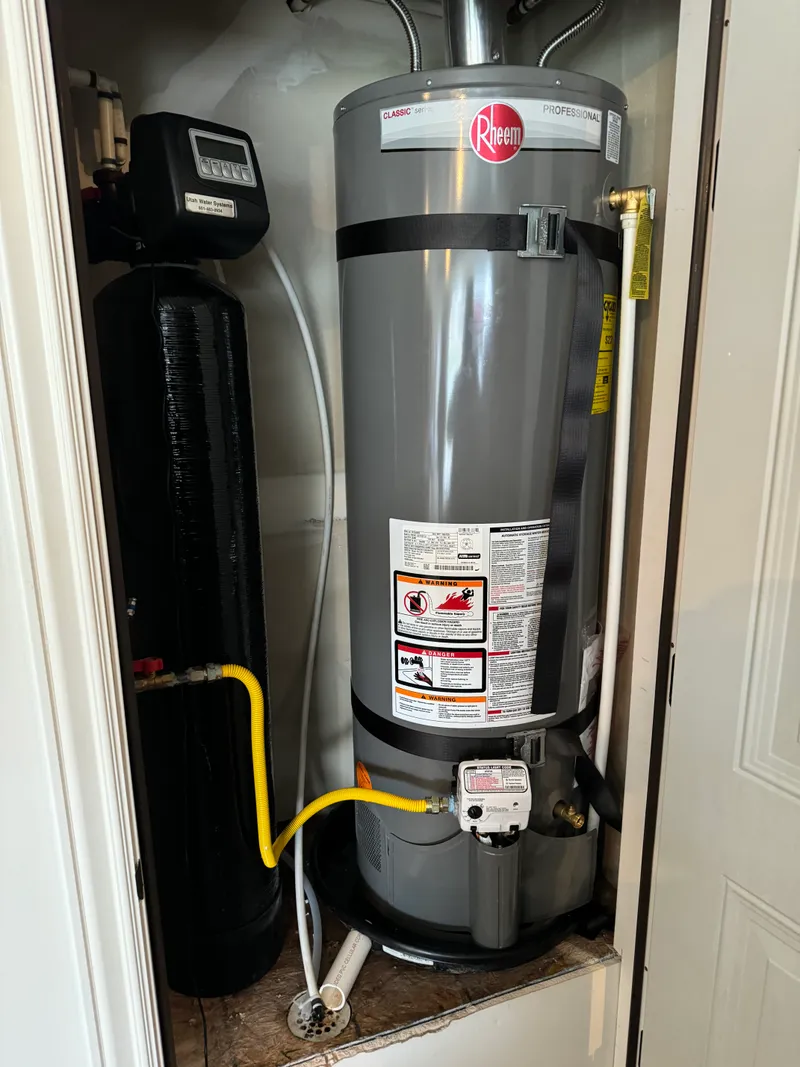
Tankless Water Heaters: How They Work
A tankless water heater has no storage tank. When you open a hot water faucet, a flow sensor detects the water movement and activates a gas burner (or electric heating element) that heats the water as it passes through a compact heat exchanger. The unit modulates its flame or element output in real time to maintain the set temperature at the current flow rate. When you close the faucet, the burner shuts off.
There is no standby loss because there is no stored water. The unit only burns fuel when you are actively using hot water. That is the fundamental efficiency advantage.
Pros of Tankless Water Heaters
Longer lifespan. A well-maintained tankless water heater can last 20 years or more. The heat exchanger is typically made of copper or stainless steel and does not suffer the same tank corrosion issues. With proper maintenance — specifically descaling — these units outlast tank water heaters by a wide margin.
Endless hot water. As long as the demand does not exceed the unit’s flow capacity, you will never run out of hot water. Five showers in a row, back-to-back — no problem. This is the feature that sells most homeowners on tankless.
Space savings. A tankless unit mounts on a wall and is roughly the size of a small suitcase. It frees up the floor space a tank unit would occupy, which matters in tight utility rooms and closets.
Energy efficiency. The Department of Energy estimates that tankless water heaters are 24-34% more energy efficient than tank units for homes using 41 gallons or less per day, and 8-14% more efficient for homes using around 86 gallons per day. Over a 20-year lifespan, that adds up.
Cons of Tankless Water Heaters
Higher upfront cost. A quality tankless water heater, professionally installed with proper gas line sizing, venting, isolation valves, and altitude adjustment, typically runs $2,500 to $4,500 in Northern Utah. The unit itself costs more, and installation is more involved.
Annual descaling is mandatory in Utah. This is the deal-breaker for homeowners who will not commit to maintenance. In our hard water, scale builds up inside the narrow passages of the heat exchanger. Most manufacturers require annual descaling to maintain the warranty. Skip it, and you risk cracking the heat exchanger — a repair that often costs more than the unit is worth. Professional descaling runs $150 to $200 per visit.
Isolation valves are required. To descale a tankless unit, you need isolation valves and service ports installed on the hot and cold lines at the unit. A descaling pump circulates a food-grade vinegar solution through the heat exchanger for 45-60 minutes. If your installer did not include isolation valves, they cut a corner that is going to cost you to correct later. We include them on every tankless installation.
Altitude adjustments are more complex. Tankless units have electronic controls that manage the gas-to-air ratio. At altitude, this requires setting DIP switches on the circuit board or changing firmware parameters through the control panel. Each manufacturer — Rinnai, Navien, Noritz, Rheem — handles it differently. If your installer does not set these correctly, the unit may short-cycle, throw error codes, or run at reduced capacity. We see this problem regularly along the Wasatch Front.
May need a gas line upgrade. Tankless water heaters have high peak BTU demands — 150,000 to 199,000 BTU for a whole-house unit, compared to 36,000-40,000 BTU for a standard tank. Your existing 1/2-inch gas line to the water heater almost certainly cannot supply that volume. Most tankless installations require a dedicated 3/4-inch gas line run back to the meter or manifold, which adds to the installation cost.
Winter output reduction. This one surprises homeowners. A tankless unit’s flow rate depends on how much it has to raise the incoming water temperature. When incoming water is 65 degrees and you want 120-degree output, that is a 55-degree rise. In a Northern Utah winter with 38-degree incoming water, that is an 82-degree rise — nearly 50% more work. The unit compensates by reducing flow rate. A unit rated at 9.5 gallons per minute under standard conditions might only deliver 5.5-6.5 GPM in January. This means you may need a larger unit than what the manufacturer’s sizing chart suggests for a temperate climate.
Side-by-Side Comparison
| Factor | Tank Water Heater | Tankless Water Heater |
|---|---|---|
| Upfront cost (installed) | $800 - $1,500 | $2,500 - $4,500 |
| Lifespan (without softener) | 6-9 years | 10-15 years (without descaling, likely less) |
| Lifespan (with softener) | 12-15 years | 20+ years |
| Energy efficiency | 60-65% (standard) to 80-90% (power vent/condensing) | 80-98% (condensing models) |
| Annual maintenance | Flush sediment once per year ($0 DIY, $100-$150 professional) | Mandatory descaling $150-$200/year (required for warranty) |
| Altitude adjustment | Orifice swap (mechanical, straightforward) | DIP switches or firmware (electronic, model-specific) |
| Hard water impact | Scale buildup shortens tank life, causes rumbling | Scale clogs heat exchanger, voids warranty if not descaled |
| Space requirements | 5 ft tall, 20 in. diameter floor space | Wall-mounted, roughly 26 x 18 x 10 inches |
| Hot water supply | Limited to tank capacity (40-50 gal) | Unlimited (within flow rate capacity) |
| Winter performance | No change in capacity (just recovery time) | Flow rate drops 20-30% due to cold incoming water |
Utah-Specific Factors That Should Drive Your Decision
Hard Water Is the Deciding Factor
I cannot overstate this. Northern Utah’s hard water is the single most important variable in the tank-versus-tankless decision, and it cuts both ways.
Without a water softener, a tank water heater will accumulate scale on the bottom of the tank. Annual flushing helps but does not fully prevent it. You will get 6-9 years out of the unit before scale-related corrosion causes a failure. That is a predictable, manageable replacement cycle. The cost is relatively low each time — $800 to $1,500 — and the installation is straightforward.
A tankless unit without a softener requires annual professional descaling at $150 to $200 per visit, every single year, for the life of the unit. Skip a year or two and you risk scale buildup that cracks the heat exchanger or reduces performance to the point of error codes and shutdowns. Over 15 years, that is $2,250 to $3,000 in descaling costs on top of the higher purchase price. And if the heat exchanger cracks because you missed a descaling, you are looking at a $1,500-$2,000 repair — or a full replacement.
With a water softener, the equation shifts dramatically. Softened water virtually eliminates scale buildup in both types of water heater. A tank unit will reach its full 12-15 year design life. A tankless unit will reach 20+ years, still benefits from occasional descaling as a precaution, but is not at constant risk of failure from scale.
When you run the numbers over 20 years with a softener in place, tankless wins on total cost of ownership despite the higher upfront investment. Without a softener, tank units are more practical and more forgiving.
Altitude Affects Both Types
Both tank and tankless water heaters need altitude adjustment in Northern Utah, but the complexity differs. A tank water heater needs the correct orifice — a mechanical part swap that is hard to get wrong. A tankless unit needs electronic parameter changes that vary by manufacturer, model, and altitude range. We regularly encounter tankless units in Utah homes that were never altitude-adjusted, resulting in short-cycling, error codes, and reduced output.
If you go tankless, make sure your installer documents the altitude settings and which DIP switches or parameters were changed. If they cannot tell you specifically what they did, that is a problem.
Winter Incoming Water Temperatures
Northern Utah incoming water temperatures drop to 35-45 degrees Fahrenheit in winter. This does not affect tank water heaters in any meaningful way — the tank still holds the same volume and the burner still heats it to the same temperature. Recovery time may be slightly longer, but capacity is unchanged.
For tankless units, cold incoming water is a real performance concern. The unit must work harder to achieve the same temperature rise, which means lower maximum flow rates. A unit sized for a temperate climate may not be adequate here. I typically recommend sizing up by one model for Northern Utah installations — if the calculator says you need a 160,000 BTU unit, go with the 180,000 or 199,000 BTU model. The incremental cost is modest and you will not regret it in January.
Kevin’s Recommendation
After years of installing and servicing both types across Northern Utah, here is my honest assessment:
If you have a water softener or plan to install one, a tankless unit is the better long-term investment. The combination of softened water, proper altitude adjustment, and occasional maintenance will give you 20+ years of endless hot water with lower operating costs. The higher upfront cost pays for itself over the unit’s life.
Without a softener, a quality tank unit with annual flushing is more practical for most Northern Utah homes. The lower upfront cost, simpler maintenance, and predictable replacement cycle make it the less risky choice. You will replace it more often, but each replacement is affordable and straightforward.
For large households — five or more people, multiple bathrooms in regular use — the convenience of endless hot water may justify going tankless even without a softener, as long as you commit to the annual descaling schedule.
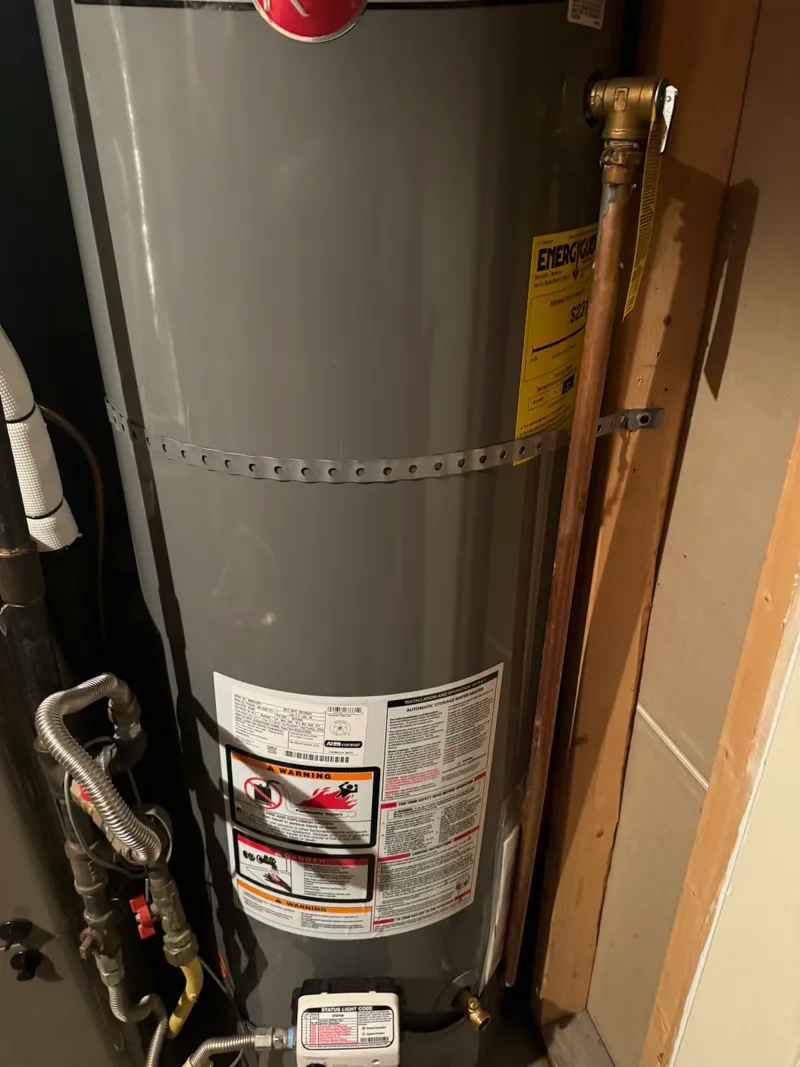
And for any installation type, I always recommend earthquake strapping to meet Utah seismic code requirements. It takes minutes to install and prevents a major hazard.
Frequently Asked Questions
Can I install a tankless water heater myself to save money? I strongly advise against it. Beyond the obvious code and permit issues, tankless installation in Utah requires correct gas line sizing (usually a dedicated 3/4-inch line), proper venting (Category III stainless steel vent pipe for non-condensing units, PVC for condensing), altitude adjustment of electronic controls, and installation of isolation valves for descaling. A mistake on any of these creates a safety hazard or voids your warranty. This is a job for a licensed plumber who works at Utah altitudes regularly.
How do I know if my current tankless water heater has been properly adjusted for altitude? Check your owner’s manual for the altitude adjustment procedure specific to your model. If you can access the DIP switches or control panel parameters, verify they match your elevation. If you are unsure, schedule a service call — we can verify the settings, check combustion performance with an analyzer, and adjust as needed. It takes less than an hour and could prevent years of reduced performance.
Is an electric tankless water heater a good alternative? Electric tankless units avoid the gas line and venting complications, but they have their own challenges. They require substantial electrical capacity — often 150 to 200 amps for a whole-house unit — which may require a panel upgrade. They also have lower maximum flow rates than gas models. In most Northern Utah homes with existing gas service, a gas tankless unit is the better choice. Electric point-of-use tankless units can work well for supplementing a tank water heater at a distant fixture.
How much will I save on energy bills with a tankless water heater? The typical Northern Utah household saves $75 to $150 per year on gas costs with a tankless unit compared to a standard tank. The savings depend on your usage patterns — households that use hot water in bursts with long idle periods between (common with families at work and school during the day) save more. Over a 20-year lifespan, that is $1,500 to $3,000 in energy savings, which helps offset the higher upfront cost.
Ready to Make the Right Choice?
Whether you are leaning toward a tank or tankless water heater, the most important thing is getting it installed correctly for Northern Utah conditions. Proper altitude adjustment, hard water considerations, and correct sizing for our cold incoming water temperatures are not optional — they are what determines whether your investment lasts.
Our plumbing team installs and services both tank and tankless water heaters across the Wasatch Front. We will assess your home’s specific situation — water hardness, softener status, gas line capacity, elevation, and household demand — and give you a straight recommendation.
Call us at (385) 401-9490 or contact us online to schedule a consultation. We would rather help you choose the right system upfront than replace the wrong one in five years.
Topics